
How Fast Should You Lose Weight?
CDC recommends losing 0.5-1 kilogram weekly for sustainable results. Learn the science-backed approach to healthy weight loss that preserves muscle and keeps weight off.
Loraine Berriman
11/25/202510 min read
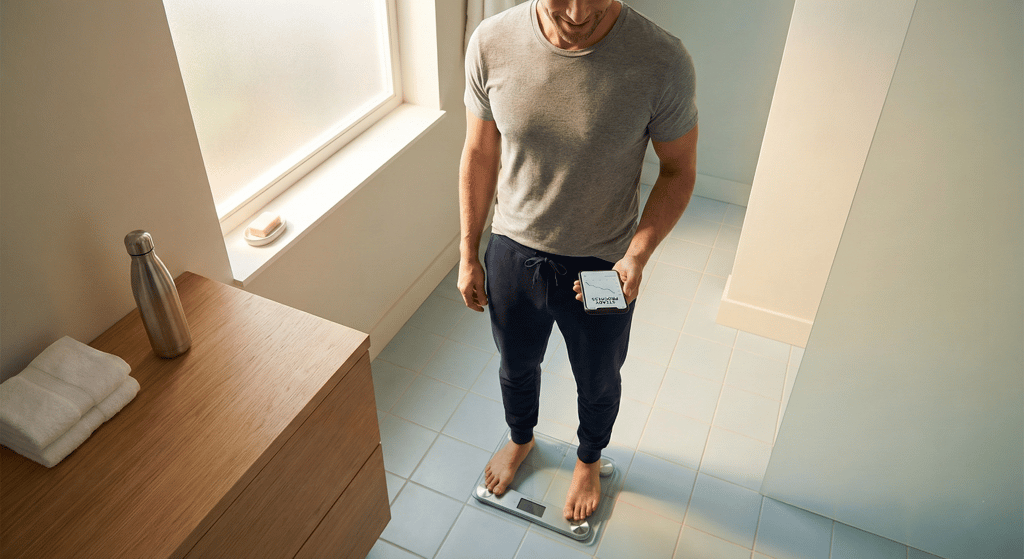
I watched a 52-year-old client lose 8 kilograms in three weeks using a 900-calorie diet. She was thrilled. Six months later, she'd gained back 10 kilograms and lost the strength to climb stairs without resting. The rapid results she wanted became the exact reason she failed.
What's a Healthy Weight Loss Rate?
A healthy weight loss rate is 0.5 to 1 kilogram per week, according to the Centers for Disease Control and Prevention (CDC, 2025). This gradual approach maximizes fat loss while preserving lean muscle mass, leading to sustainable results you can maintain long-term.
Research from the National Institutes of Health (NIH, 2024) confirms this rate keeps your metabolism stable and dramatically improves your odds of keeping the weight off. People who lose weight gradually are significantly more likely to maintain their progress compared to those who crash diet.
Why Your Weight Loss Rate Matters More Than You Think
Here's what most people don't realize: over 80% of lost weight gets regained within five years. That's not a failure of willpower. It's biology fighting back against extreme approaches.
When Sarah, a 38-year-old teacher, came to The Fitness Edit weighing 84 kilograms, she wanted to drop 13 kilograms before her sister's wedding in eight weeks. I showed her the research: rapid weight loss of more than 1 kilogram per week results in greater muscle mass loss than slow weight loss. She chose the science-backed path instead.
Twelve months later, Sarah weighs 70 kilograms. She's kept off 15 kilograms because we prioritized sustainable habits over speed. More importantly, she maintained her strength throughout the process.
The stakes are real. Even a 3% to 5% weight loss can lower triglycerides and glucose levels in your blood, reducing your risk of developing type 2 diabetes. But lose too fast, and you'll sacrifice the muscle that keeps your metabolism running efficiently.
Calculate Your Target Calorie Deficit
Your body needs a specific calorie deficit to lose weight safely. The math is straightforward: half a kilogram of fat contains approximately 3,500 calories. To lose half a kilogram per week, you need a daily deficit of 500 calories (500 x 7 = 3,500).
For 1 kilogram weekly, double that to 1,000 calories daily. The CDC recommends maintaining a calorie deficit through both reduced food intake and increased physical activity.
Start by tracking your current intake for three days. Most people underestimate their calories by 30-40%. Use this baseline to create your deficit intelligently, not drastically.
Structure Your Weekly Weight Loss
Week-to-week weight fluctuates naturally due to water retention, hormones, and digestive timing. Don't panic over daily scale changes. Instead, track weekly averages.
During the first week, you might lose 1.5-2.5 kilograms as your body releases water weight along with initial fat loss. Each gram of glycogen retains about 3 grams of water, so initial weight loss includes significant water loss. This is temporary and normal.
From week two onward, expect consistent 0.5-1 kilogram losses. Some weeks you'll lose more, others less. What matters is the monthly trend, not individual weigh-ins.
Protect Your Muscle Mass
This is where most diets fail catastrophically. Studies show muscle loss from weight loss medications ranges from 25% to 39% of total weight lost. That's not just numbers on a scale. That's your metabolism, your strength, and your long-term success vanishing.
Research from 2024 proves resistance training can prevent almost 100% of muscle loss from calorie restriction. That's why every client at The Fitness Edit combines strength training with their nutrition plan.
Train each major muscle group twice weekly. Focus on compound movements: squats, deadlifts, rows, and presses. Progressive overload matters more than endless cardio.
Consume 0.8-1.6 grams of protein per kilogram of body weight daily. An 80-kilogram person needs 126-180 grams daily. Spread this across your meals for optimal muscle retention.
Monitor Your Progress Correctly
The scale tells one story. Your body composition tells the truth. Track these metrics monthly:
Body measurements at waist, hips, chest, arms, and thighs. Fat loss occurs from multiple sites simultaneously, and measurements reveal progress the scale might miss.
Progress photos in consistent lighting and clothing. Visual changes often appear before significant scale drops, especially when you're building muscle while losing fat.
Performance metrics like strength levels and endurance capacity. If your workout performance declines sharply, you're losing weight too fast and sacrificing muscle.
Energy levels throughout the day. Sustainable weight loss shouldn't leave you exhausted. Chronic fatigue signals excessive restriction.
Adjust Your Approach Based on Results
Your metabolism adapts to calorie restriction. The energy level required to maintain stable body weight reduces during weight loss due to metabolic adaptations. This explains weight loss plateaus.
When progress stalls for three consecutive weeks despite adherence, recalculate your calorie needs. Don't slash calories further. Instead, increase physical activity by 30-60 minutes weekly or implement one 24-hour diet break monthly to reset metabolic hormones.


The Costly Mistake Most Dieters Make
They chase rapid results with extreme restriction, then wonder why they regain everything plus extra pounds.
Marcus came to us after losing 20 kilograms in 10 weeks on a 1,200-calorie diet. Impressive, right? Except he'd lost 8 kilograms of muscle along with 12 kilograms of fat. His metabolism had crashed. He felt weak, cold constantly, and couldn't concentrate at work.
We reversed course immediately. Gradually increased his calories to maintenance while implementing proper strength training. He initially gained 2.5 kilograms but stabilized there. Six months later, he'd lost another 7 kilograms of pure fat while building back 4 kilograms of muscle. His metabolism was stronger than before his crash diet.
The research backs this up. People who lose weight at a gradual, steady pace of about 0.5 to 1 kilogram per week are more likely to keep the weight off than people who lose weight quickly.
Extreme calorie restriction triggers your body's starvation response. Hormone levels shift, metabolism slows, appetite increases, and muscle breaks down for energy. You're literally programming your body for failure.
How Healthy Weight Loss Compares to Popular Alternatives
Let's examine the real-world outcomes of different approaches:
Gradual Weight Loss (0.5-1 kg/week)
Fat loss: 85-90% of total loss
Muscle retention: 90-95% maintained
Metabolic impact: Minimal slowdown
Success rate at 2 years: 40-50%
Energy levels: Stable throughout
Rapid Weight Loss (1.5+ kgs/week)
Fat loss: 60-75% of total loss
Muscle retention: 60-75% maintained
Metabolic impact: Significant reduction
Success rate at 2 years: 10-20%
Energy levels: Often compromised
Very Low-Calorie Diets (800 calories)
Fat loss: 55-70% of total loss
Muscle retention: 50-65% maintained
Metabolic impact: Severe reduction
Success rate at 2 years: 5-15%
Energy levels: Severely impaired
The data is clear. Research shows approximately 20% of overweight individuals successfully maintain long-term weight loss when defined as losing at least 10% of initial body weight. Those 20% share one characteristic: they lost weight gradually and built sustainable habits.
The Counter-Intuitive Truth About Weight Loss Speed
You'd think faster weight loss means faster results and more motivation to continue. The opposite is true.
People who lose weight rapidly in the first 6 months are 5.1 times more likely to achieve 10% weight loss at 18 months than slow losers. Wait, doesn't this contradict everything?
No. Here's the nuance: rapid INITIAL weight loss driven by high adherence and motivation predicts long-term success when it transitions into moderate, sustainable loss. The key is that initial momentum from seeing results, not continued extreme restriction.
Think of it like launching a rocket. You need intense thrust initially to overcome gravity, then efficient cruising speed for the journey. Apply extreme restriction continuously, and you'll burn out. Use initial motivation to build momentum, then settle into a sustainable pace.
After individuals successfully maintain their weight loss for 2 years, the chance of longer-term success greatly increases. If you can hit that two-year mark, you've fundamentally rewired your relationship with food and exercise.
The real counter-intuitive truth: slower weight loss gives you time to develop the skills, habits, and mindset shifts that make maintenance possible. You're not just losing weight; you're becoming a person who maintains a healthy weight naturally.
Age and Weight Loss: What Changes After 30
Your body's response to calorie restriction shifts as you age. Only 42.7% of older adults achieve weight loss success, compared to 50% of adults under 40.
This isn't because willpower declines with age. Multiple physiological factors converge:
Muscle mass naturally decreases 3-8% per decade after 30, accelerating after 60. This reduces your resting metabolic rate, meaning you burn fewer calories at rest.
Hormonal changes affect appetite regulation and fat storage patterns. Men experience testosterone decline, while women face estrogen fluctuations during perimenopause and menopause.
Recovery from exercise takes longer, making it harder to maintain high training volumes necessary for creating calorie deficits.
For clients over 30, we adjust expectations and methods. The 0.5-1 kg weekly target remains, but we emphasize:
Higher protein intake to combat age-related muscle loss. Older adults need more protein to achieve the same muscle protein synthesis as younger people.
Twice-weekly resistance training becomes non-negotiable. This isn't optional for maintaining muscle during a deficit at any age, but it's absolutely critical after 30.
Longer timeline expectations. Losing 15 kilograms might take 15-20 weeks instead of 10. That's acceptable. The goal is keeping it off, not speed.
Common Weight Loss Plateau Solutions
Plateaus happen to everyone. Your body adapts to reduced calorie intake by becoming more efficient. When weight loss stalls despite continued adherence, try these evidence-based solutions:
Refeed Days: One day weekly at maintenance calories helps reset leptin levels and reduce metabolic adaptation. This isn't a cheat day; it's strategic overfeeding with nutrient-dense foods.
Diet Breaks: After every 8-10 weeks of dieting, take 1-2 weeks at maintenance calories. Research shows this improves long-term adherence and may prevent some metabolic slowdown.
Activity Increase: Add 1,000-1,500 steps daily or one 30-minute moderate activity session weekly. Small increases in movement add up without triggering hunger like intense exercise often does.
Sleep Optimization: Poor sleep increases ghrelin (hunger hormone) and decreases leptin (satiety hormone). Aim for 7-9 hours nightly. Many plateaus break when sleep improves.
Stress Management: Chronic stress elevates cortisol, promoting fat storage especially around the midsection. Implement daily stress-reduction practices: meditation, walking, or progressive relaxation.
Building Your Sustainable Weight Loss Plan
Here's the exact framework we use at The Fitness Edit for clients targeting healthy weight loss:
Weeks 1-2: Assessment and Baseline Track current food intake without restriction for one week. Measure body composition, circumferences, and performance baselines. Calculate target calories based on a 500-750 calorie deficit from maintenance.
Weeks 3-8: Active Weight Loss Phase Implement calorie target with flexible meal planning. Train resistance exercises 3 times weekly, cardiovascular activity 2 times weekly. Monitor weekly weigh-ins and adjust if losing more than 1 kilogram weekly. Expect 4-8 kilograms lost during this phase.
Weeks 9-12: Adaptation Phase Assess progress and recalculate calorie needs based on new body weight. Introduce one refeed day weekly. Focus on habit solidification rather than just restriction. Expect 2-4 kilograms lost during this phase.
Weeks 13+: Continued Progress and Maintenance Preparation Continue moderate deficit with regular diet breaks every 8-10 weeks. Begin transitioning to maintenance behaviors while still in a small deficit. Practice weight maintenance skills before reaching goal weight.
The entire process for losing 10-20 kilograms takes 5-10 months. That's not exciting to hear when you want results yesterday. But research shows larger weight reduction during the weight loss phase predicts successful weight loss maintenance when done at appropriate rates.


Sustainable weight loss isn't about finding the perfect diet or the fastest method. It's about building a system that fits your life so well you can maintain it indefinitely.
The Fitness Edit specializes in creating personalized weight loss plans for adults over 30 who are ready to stop the yo-yo cycle. Our approach combines evidence-based strength training and behavioral coaching to help you lose weight at a healthy rate while building habits that last.
Explore how we can help you: Global Online Coaching | At-home Personal Training
FAQs
Q: Is losing 1.5 kilograms per week too fast? A: For most people, yes. Losing more than 1 kilogram weekly increases muscle loss risk and makes long-term maintenance harder. However, individuals with significant obesity (BMI over 35) may safely lose 3 pounds weekly initially under professional supervision. The rate should slow to 0.5-1 kilograms as you approach a healthy weight range. Rapid loss works temporarily but compromises metabolic health and lean tissue.
Q: How long does it take to lose 10 kilograms safely? A: At a healthy rate of 0.5-1 kilogram per week, losing 10 kilograms takes 10-20 weeks (2.5-5 months). This timeline allows for sustainable fat loss while preserving muscle mass and metabolic function. People who reach their goal in this timeframe have significantly higher success maintaining the loss compared to those who crash diet. Remember that weight loss isn't linear; some weeks you'll lose more, others less, based on various factors.
Q: Why am I not losing weight eating 1,200 calories? A: Several factors explain weight loss plateaus at low calories. First, 1,200 calories may be too low, triggering metabolic adaptation where your body reduces energy expenditure. Second, most people underestimate calorie intake by 20-40%, meaning actual consumption may be higher. Third, insufficient protein or resistance training leads to muscle loss, which further slows metabolism. Finally, stress and poor sleep disrupt hormones that regulate appetite and fat storage. Consider working with a nutrition professional to assess your actual intake and metabolic needs.
Q: Slow weight loss vs rapid weight loss: which keeps weight off longer? A: Slow weight loss of 0.5-1 kilogram weekly provides superior long-term results. Studies show that gradual weight loss better preserves muscle mass, maintains metabolic rate, and allows time to develop sustainable habits. Rapid weight loss often results in 25-39% muscle loss, metabolic slowdown, and regain. However, the best predictor of long-term success is maintaining lost weight for 2+ years, regardless of initial speed. Focus on building habits you can sustain indefinitely rather than achieving fast results.
Q: Can you lose weight without exercise? A: Yes, weight loss occurs primarily through calorie restriction, and diet alone can create the necessary deficit. However, exercise dramatically improves outcomes. Without resistance training, you'll lose significant muscle along with fat, slowing your metabolism and making maintenance harder. Studies show people who combine diet and exercise maintain weight loss more successfully than those who use diet alone. At minimum, incorporate 2-3 resistance training sessions weekly to preserve muscle during weight loss. This protects your metabolism and improves body composition.
Q: How much protein do I need when losing weight?
A: Aim for 0.8-1.6 gram of protein per kilogram of body weight daily during weight loss. For a 180-pound person, that's 126-180 grams daily. Higher protein intake preserves muscle mass during calorie restriction, increases satiety, and has a higher thermic effect (burning more calories during digestion). Distribute protein across 3-4 meals for optimal muscle protein synthesis. Older adults (over 50) should target the higher end of this range due to age-related resistance to muscle protein synthesis.
Further reading on The Fitness Edit: 'How Sleep Destroys (or Saves) Your Weight Loss Efforts.'
You can also read about 'Eating Less But Not Losing Weight?'
The information provided in this blog post is intended solely for informational purposes. It is not meant to replace professional medical advice, diagnosis, or treatment. Consult health care providers for personalised medical advice and treatment options related to specific health concerns.
About The Author
Loraine is an internationally certified personal trainer and the founder of The Fitness Edit, a high-performance coaching consultancy serving professionals on the Garden Route and globally. She specialises in bespoke, data-driven coaching systems for busy professionals who have outgrown generic fitness solutions.
© 2026 The Fitness Edit. All rights reserved
The Fitness Edit is a trading name of Elevate Wellness Co (Pty) Ltd

Local Mobile Coaching