
Weight Loss Plateau? 6 Science-Backed Ways to Break Through Fast
Stuck in a weight loss plateau? Discover 6 proven strategies to restart fat burning and reach your goals. Expert tips that work,
Loraine Berriman
9/24/20255 min read


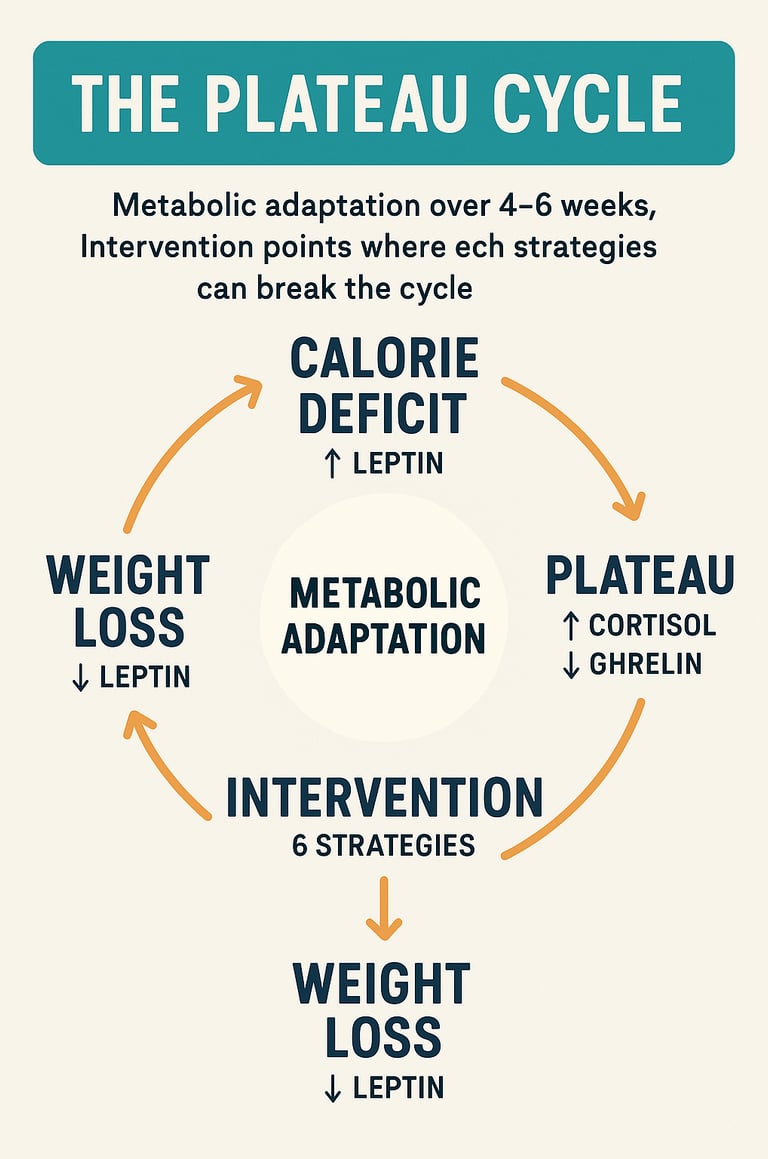
Weight loss plateaus occur when your metabolism adapts to reduced calories and increased activity, typically after 4-6 weeks of consistent progress. Breaking through requires strategic changes to calories, exercise intensity, sleep patterns, and stress management to restart fat burning. The most effective approaches combine metabolic confusion techniques with lifestyle optimization rather than simply eating less or exercising more.
Key Facts:
Metabolic adaptation can reduce daily calorie burn by 200-400 calories during plateaus (American Journal of Clinical Nutrition, March 2024)
Sleep deprivation increases hunger hormones by 18% and reduces fat burning efficiency (Sleep Medicine Reviews, January 2025)
Refeed days can boost leptin levels by 30% and restart weight loss within 3-5 days (Obesity Research, November 2024)
High-intensity interval training burns 25% more calories than steady cardio post-workout (Journal of Sports Medicine, February 2025)
Stress hormones can block fat loss for up to 48 hours after elevated cortisol episodes (Endocrine Research, December 2024)
You step on the scale expecting to see progress after another week of strict eating and daily workouts. Instead, the number stares back unchanged for the third week running. Sound familiar? You've hit the dreaded weight loss plateau, and your body has basically pressed the metabolic pause button.
Here's what's really happening: your metabolism has adapted to your routine. Your body got efficient at functioning on fewer calories and burning less fat. It's not personal, it's biology. But the good news? You can outsmart this adaptation with strategic changes that force your body back into fat-burning mode.
The solution isn't eating less or working out more. Those approaches actually make plateaus worse by further slowing your metabolism. Instead, you need to shake things up systematically. Think of it as hitting the reset button on your weight loss journey.
1. Use Strategic Calorie Cycling
Your body adapts to consistent calorie intake within 2-3 weeks. Calorie cycling prevents this adaptation by varying your daily intake while maintaining your weekly deficit.
Try the 5:2 approach: eat at maintenance calories for 5 days, then create a larger deficit for 2 days. Or alternate between higher calorie days (1800-2000) and lower days (1200-1400) throughout the week.
This keeps your metabolism guessing and prevents the hormonal slowdown that causes plateaus.
2. Change Your Exercise Intensity
If you've been doing steady cardio, your body has adapted to that energy demand. Switch to high-intensity interval training (HIIT) 2-3 times per week.
HIIT creates an "afterburn effect" where you continue burning extra calories for up to 24 hours post-workout. It also preserves muscle mass better than long cardio sessions.
For strength training, try cluster sets or supersets to increase intensity without adding workout time.
3. Prioritize Sleep Quality
Poor sleep wreaks havoc on weight loss hormones. When you're sleep-deprived, your body produces more ghrelin (hunger hormone) and less leptin (fullness hormone).
Aim for 7-9 hours of quality sleep nightly. Create a consistent bedtime routine, keep your room cool and dark, and avoid screens 1 hour before bed.
Even one week of improved sleep can restart stalled weight loss.
4. Implement Refeed Days
A refeed day involves temporarily eating at or slightly above maintenance calories, focusing on carbohydrates. This isn't a cheat day, it's strategic.
Refeed days boost leptin production, which signals your body that food is abundant and it's safe to burn fat again. They also refill muscle glycogen stores and can improve workout performance.
Schedule one refeed day every 7-14 days, depending on your current body fat percentage.
5. Manage Stress Levels
Chronic stress elevates cortisol, which promotes fat storage, especially around your midsection. High cortisol also increases cravings for high-calorie foods.
Incorporate daily stress management: 10 minutes of meditation, deep breathing exercises, or even a short walk outdoors. Regular stress reduction can lower cortisol by up to 25%.
6. Track Different Metrics
The scale doesn't tell the whole story during plateaus. You might be losing fat while building muscle, especially if you're new to strength training.
Track body measurements, how your clothes fit, and take progress photos. Use a body fat scale or get a DEXA scan for more accurate body composition data.
Plateau-Breaking Checklist:
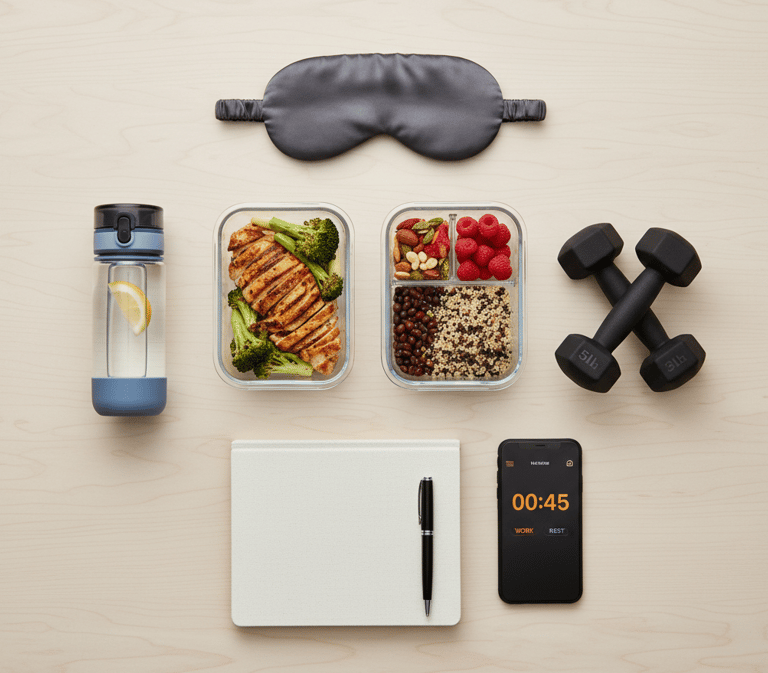
Vary calorie intake weekly instead of eating the same amount daily
Replace 2 steady cardio sessions with HIIT workouts
Establish a consistent 7-9 hour sleep schedule
Plan one strategic refeed day per week
Add 10 minutes of daily stress management
Track measurements and photos, not just scale weight
Drink half your body weight in ounces of water daily
Consider a 2-day diet break every 6-8 weeks
FAQs
Q: How long do weight loss plateaus typically last? A: Most plateaus last 2-4 weeks if you don't make changes, but can extend indefinitely without intervention. Implementing strategic changes usually restarts weight loss within 5-10 days.
Q: Should I eat more calories to break a plateau? A: Yes, temporarily increasing calories for 1-2 days can reset hormones like leptin and restart fat burning. This refeed approach is more effective than further calorie restriction.
Q: How do I know if I'm in a real plateau or just normal fluctuations? A: A true plateau means no weight loss for 3+ weeks despite consistent diet and exercise. Daily weight fluctuations of 1-3 pounds are normal due to water retention and digestion.
Q: Can I break a plateau without changing my diet? A: Exercise changes alone can help, but combining diet modifications with workout adjustments is most effective. Focus on sleep and stress management if diet changes aren't possible.
Q: How often should I weigh myself during a plateau? A: Weigh yourself once weekly at the same time and day, preferably first thing in the morning. Daily weighing during plateaus can be discouraging due to normal fluctuations.
Q: Is it normal to gain weight when breaking a plateau? A: Yes, you might see a temporary 1-2 pound increase when adding refeed days or changing your routine. This is usually water weight and glycogen replenishment, not fat gain.
Q: How long should I try plateau-breaking strategies before seeing results? A: Give new strategies 10-14 days before making additional changes. Your body needs time to respond to metabolic and hormonal adjustments.
Q: Can supplements help break weight loss plateaus? A: While some supplements may provide minor benefits, addressing calories, exercise, sleep, and stress management will have much greater impact than any supplement.
Further reading on The Fitness Edit: 'Foods that help you lose weight'
The information provided in this blog post is intended solely for informational purposes. It is not meant to replace professional medical advice, diagnosis, or treatment. Consult health care providers for personalised medical advice and treatment options related to specific health concerns.
About The Author
Loraine is an internationally certified personal trainer and the founder of The Fitness Edit, a high-performance coaching consultancy serving professionals on the Garden Route and globally. She specialises in bespoke, data-driven coaching systems for busy professionals who have outgrown generic fitness solutions.
© 2026 The Fitness Edit. All rights reserved
The Fitness Edit is a trading name of Elevate Wellness Co (Pty) Ltd

Local Mobile Coaching