Cardio vs Weights: Best Strategy for Fat Loss
Explore science-backed benefits of cardio and weight training for fat loss and weight loss. Discover which approach fuels metabolism, preserves muscle, and delivers lasting results.
Daryn B
8/5/20253 min read


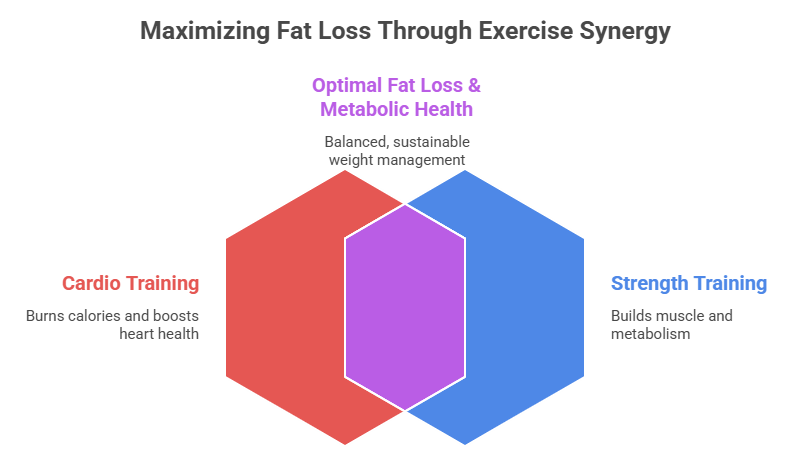
Losing weight often means choosing between a sweaty run and pumping iron. The truth is both cardio and strength training play unique roles in fat loss and weight loss. When you lace up your trainers, you burn calories in the moment. Jumping rope, cycling or brisk walking torch energy quickly and improve heart health. According to Harvard Health, one study found that adding 150 minutes of moderate aerobic exercise per week slightly raises your resting energy expenditure; so you keep burning calories long after you’ve cooled down.
On the other hand, lifting weights builds lean muscle mass, which is critical for a revved-up metabolism. Muscles are metabolically active tissues that demand energy even at rest. Research has shown that overweight adults who combined strength training with a modest diet lost about the same total weight as those who focused on cardio, but preserved more muscle and shed more fat overall. Preserving muscle not only gives you a toned look but also prevents metabolic slow-downs that often follow traditional calorie-cutting plans.
Here’s a fun fact: after a strength workout, your body continues to burn extra calories as it repairs muscle fibers and replenishes energy stores, a phenomenon known as excess post-exercise oxygen consumption or EPOC. Depending on the intensity and duration of your session, EPOC can boost calorie burn by an additional 6 to 15 percent for up to 48 hours.
Rather than choosing one or the other, research suggests a two-pronged approach is most effective. Combining two to three weekly sessions of strength training with two or three cardio workouts keeps things fresh and maximizes fat loss. You might do interval runs on Monday and Thursday, full-body circuits on Tuesday and Friday, then add a long weekend cycle or swim to stay active without getting bored.
If you’re short on time, high-intensity interval training (HIIT) marries the best of both worlds. Alternating bursts of all-out effort with rest periods during a 20- to 30-minute session can burn a load of calories, spark EPOC and stimulate muscle recruitment. A 2021 review found HIIT sessions to be as effective as longer steady-state cardio for reducing body fat while also improving strength and endurance.
To keep momentum, sprinkle in active habits throughout your day. Take the stairs, stand while you work, or squeeze in mini-bursts of body-weight exercises between tasks. These “exercise snacks” accumulate extra calorie burn and help break up long periods of sitting, a known risk factor for stubborn belly fat.
In the end, the best strategy for fat loss is the one you enjoy and can stick with consistently. If pounding the pavement energizes you, lace up daily. If lifting weights makes you feel strong, add progressive overload to your routine. Mixing up workouts not only targets different energy systems and muscle groups but also keeps your mind engaged, making weight loss a sustainable journey rather than a chore.
Kickstart your weight loss in 7 days with this simple, FREE guide to stop the guesswork, boost your energy, and build healthy habits that fit your busy life.
Further reading on The Fitness Edit: 'The Best Weight Loss Program in South Africa.'
You can also read about 'Top 10 Foods That Speed Up Fat Loss and Keep You Full.'
References:
Simple math equals easy weight loss, Harvard Health Publishing. https://www.health.harvard.edu/staying-healthy/simple-math-equals-easy-weight-loss
Weight training helps maintain muscle mass in overweight adults, Harvard Health Publishing. https://www.health.harvard.edu/staying-healthy/weight-training-helps-maintain-muscle-mass-in-overweight-adults
Boutcher SH. “High-intensity intermittent exercise and fat loss.” Journal of Obesity (2011). https://www.ncbi.nlm.nih.gov/pmc/articles/PMC2991639/
The information provided in this blog post is intended solely for informational purposes. It is not meant to replace professional medical advice, diagnosis, or treatment. Consult health care providers for personalised medical advice and treatment options related to specific health concerns.
© 2026 The Fitness Edit. All rights reserved

Local Mobile Coaching